
If a damaged or infected tooth can be treated and then protected with a crown or filling, a root canal usually lets you keep it. If the tooth is too broken, or the gum and bone around it no longer give it enough support, extraction may be the better option. The amount of pain does not tell you which one you need; an exam and X-rays do.
Below is what that evaluation looks at, what each option involves and what to ask before you decide.
Root Canal or Extraction: What Is the Difference?
| Root canal | Extraction | |
|---|---|---|
| What it does | Treats the inside of the tooth | Removes the tooth |
| What you keep | Your natural tooth | The space where the tooth was |
| Usual next step | A crown or filling to protect the tooth | Deciding whether to replace the tooth (implant, bridge or removable option) |
| A good question to ask | Is there enough healthy tooth left to restore it? | How will the gap affect my bite if I don’t replace it? |
What Does a Root Canal Actually Do?
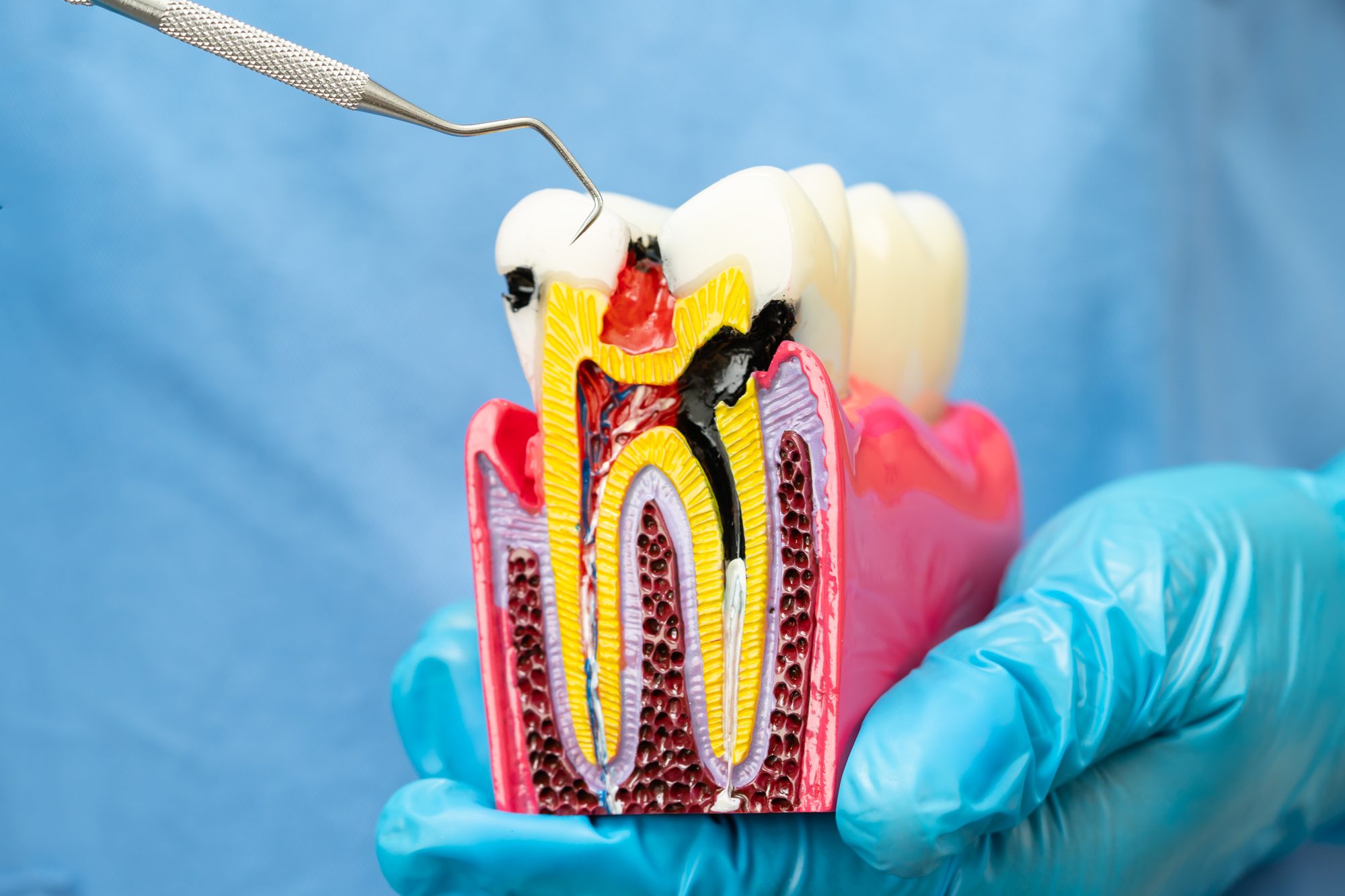
Inside each tooth is soft tissue called the pulp. When deep decay, a crack or an injury leaves the pulp inflamed or infected, a root canal removes it, cleans the canals inside the root and seals them (American Association of Endodontists). The tooth then needs a final restoration to protect it.
The American Dental Association describes root canals as a way to repair and save a tooth instead of removing it (ADA MouthHealthy). For the symptoms that usually lead to this treatment, see Why Do I Need a Root Canal?
When Is Extraction the Better Option?
A root canal treats infection inside the tooth, but it cannot rebuild a tooth that has too little structure left to hold a restoration. Extraction may be recommended when:
- Too little healthy tooth remains to support a crown or filling.
- A crack or fracture reaches deep into the root.
- The gum and bone around the tooth no longer support it well.
In many cases, Dr. Dudley can extract wisdom teeth in our office. If a tooth is impacted, he will coordinate your care with an oral surgeon.
How Do We Decide Whether Your Tooth Can Be Saved?
Two teeth that hurt the same can have very different outlooks. The exam looks at:
- How much healthy tooth structure is left.
- Where a crack or fracture is and how far it goes.
- The health of the gums and bone around the tooth.
- Any previous treatment on that tooth.
- Your overall health, your preferences and how you will care for the tooth afterward.
Dental X-rays complete the picture. If something is unclear, ask what makes the tooth restorable, or what prevents it from being saved.
What Should You Plan After Each Option?
After a root canal: the tooth usually needs a crown or another final restoration. Avoid heavy chewing on it until that restoration is in place, and call us if swelling or pain gets worse.
After an extraction: follow the care instructions for the healing area, and plan what to do with the space. A gap can make chewing harder, and nearby teeth may shift over time. Our guide to dental bridges vs. implants compares two common ways to replace a tooth.
Some discomfort after dental treatment can be normal. Our article on common reasons you could have pain after dental work explains what to watch for.
When you compare options, ask for an estimate of the complete plan for each one, not just the first appointment.
Will Antibiotics Fix a Tooth Infection?
Usually not on their own. Antibiotics do not remove the source of an infection inside a tooth. For most toothaches that start in the pulp, without signs that the infection is spreading, the American Dental Association advises dental treatment rather than antibiotics (ADA guideline summary, CDA, 2019). Your dentist decides whether you need them based on your diagnosis.
When Is a Toothache Urgent?
Pain that keeps coming back, swelling or a broken tooth should be checked soon. If swelling makes it hard to breathe or swallow, seek emergency medical care right away.
Frequently Asked Questions
Is it better to save a tooth or pull it?
When a tooth can be restored and kept healthy, saving it keeps your natural tooth in place. When it can’t be restored reliably, extraction plus a plan to replace it may be the better choice. An exam tells you which applies to your tooth.
Can a general dentist do a root canal, or do I need a specialist?
Many general dentists perform root canals, and some cases are referred to an endodontist, a dentist who specializes in root canal treatment. Root canal therapy is part of Dr. Dudley’s training.
Does dental insurance cover a root canal or an extraction?
It depends on your plan. Before treatment, ask for an estimate of the full plan for each option and check your benefits with your insurance company.
What happens if I don’t replace a pulled tooth?
A gap can make chewing harder and may let neighboring teeth shift. Ask about replacement options, such as an implant or a bridge, before or soon after the extraction.
Get Your Tooth Evaluated in Lompoc
If you live in Lompoc or Vandenberg Village and a tooth hurts, is cracked or feels different when you bite, an exam is the first step to knowing whether it can be saved. Learn more about our restorative dental care, call 805-736-6579 or request an appointment.
Lompoc Family Dental · 1111 E Ocean Ave, Suite 11, Lompoc, CA 93436
About Dr. Dudley: Dr. Dane Dudley studied at NYU College of Dentistry and completed a residency in Advanced Education in General Dentistry at UCLA. His training includes root canal therapy and computer-guided implant placement.


